
From Deliverables to Project Value: What M.O.R.E. Means for Everyday Project Work
For years, project success had a simple definition: deliver the agreed scope, on time and within budget. Judged even by this narrow standard, the results are sobering. According to Wellingtone’s State of Project Management 2024 survey, only 34% of organizations usually or always complete projects on time, a similar share stays within budget, and just 36% consistently deliver the full expected benefits. PMI has therefore been shifting the conversation from project management success to project success, understood as outcomes that justify the time, effort and investment. The theme of PM Summit 2026, M.O.R.E.: The Power of Value, captures this shift in four practices: Manage Perceptions, Own Success, Relentlessly Reassess and Expand Perspective.
Each of these practices sounds convincing in a keynote. The real test comes on Monday morning, when teams return to status meetings, task lists and reports. The research cited in this article points consistently in one direction: organizations do not lack effort, they lack structure and measurement. Value thinking survives daily work only when it is embedded in project documents, routines and data. Below is a look at what each letter of M.O.R.E. can mean in practice, and what the evidence says about it.
What is project value and why delivery alone is not enough
Project value is the measurable benefit a project delivers to the organization relative to the effort and expense it consumes: revenue growth, cost reduction, risk avoided, new capabilities or improved customer outcomes. It should not be confused with planned value from earned value management, which describes the budgeted cost of scheduled work, not the business benefit of the result. PMI’s Step Up report from 2025 makes this the definition of success itself: a project succeeds when the value it delivers exceeds the effort and expense involved, and by that measure only about half of projects succeed today. The four M.O.R.E. practices are a way of keeping project value in view from initiation to closure.
M. Manage Perceptions: value that nobody sees does not count
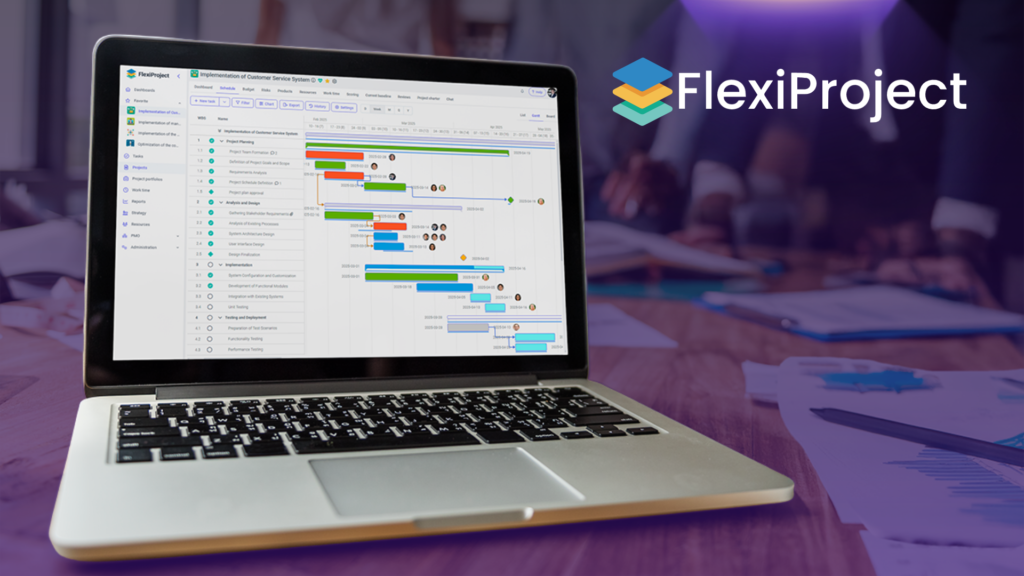
A project can deliver real value and still be perceived as a failure, because key stakeholders expected something different or never saw the evidence. Managing perceptions starts with knowing what stakeholders expect and how they define value, and continues with reporting that shows facts instead of opinions. The same Wellingtone survey indicates how far practice is from this standard: about half of respondents have no real-time access to project KPIs and spend at least one day every month manually assembling reports. Reporting built on current project data changes the quality of these conversations. When progress is visible against an approved plan, for example on an interactive Gantt chart with dependencies and milestones, stakeholders discuss the same picture, and there is far less room for conflicting interpretations of how the project is doing.

O. Own Success: keep the business objective alive after kickoff
In many organizations the most valuable discussion about a project happens before it starts. The business case phase covers costs, benefits, risks and strategic fit. Once execution begins, attention moves to schedules and tasks, and the original rationale quietly disappears. PMI’s Pulse of the Profession 2025 shows how wide the competency side of this gap is: only 18% of project professionals demonstrate high business acumen, while 66% remain at a moderate level. The same study finds that professionals with high business acumen evaluate projects using more success criteria, 9.1 on average compared with 6.3 for others, and achieve measurably better outcomes. Owning success therefore means writing the business objective, the KPIs and the benefit owner into the project from day one. A dedicated project charter module is the natural anchor for this logic: it keeps the question of why the project exists visible throughout its life, not only in the kickoff presentation.
R. Relentlessly Reassess: reviews as value decisions, not status updates
Assumptions age quickly. Gartner’s 2024 survey of 3,100 CIOs and over 1,100 business leaders found that only 48% of digital initiatives meet or exceed their business outcome targets, which means that delivering the implementation is not the same as delivering the result. Relentless reassessment requires a regular rhythm in which teams compare actual progress with the approved baseline, analyze deviations in schedule and budget, and decide whether the expected project value is still realistic. The practical difficulty is that such meetings often degrade into status updates that confirm activity instead of questioning value. Structured, data-based project reviews support the healthier pattern: the review material comes from project data rather than hand-made slides, deviations from the baseline are explicit, and every review ends with recorded decisions, including the uncomfortable ones about reducing scope or stopping a project.
E. Expand Perspective: from a single project to the whole portfolio
Even a well-run project can be the wrong project. Expanding perspective means looking beyond individual initiatives and asking how the whole set of projects serves the strategy and the broader environment of the organization. Research by PMI and PwC in Measuring What Matters shows the payoff of this wider view: top-performing PMOs track on average ten metrics per project, combining operational, financial and strategic measures, and are twice as likely to report much better year-over-year revenue than their peers. In practice, this perspective takes shape in project portfolio management, where initiatives are grouped, scored and compared against strategic goals, so that prioritization is based on data rather than on the loudest voice in the room.
Value as a daily habit
M.O.R.E. is not a new methodology to implement. It is a set of habits that connect everyday project work with business value: make value visible to stakeholders, anchor it in the project charter, test it in every review and judge project value at the portfolio level. The Standish Group’s CHAOS research adds one more argument for treating this as a system rather than an individual effort: projects with highly mature sponsors succeed in 67% of cases, compared with 18% for immature ones, because decisions are made faster and on better information. Keeping plans, deviations, risks and decisions in one environment, as modern PPM systems such as FlexiProject do, shortens exactly this distance between a problem and a decision. Teams that build these habits into their standard way of working will turn the theme of PM Summit 2026 into practice long after the conference ends.
